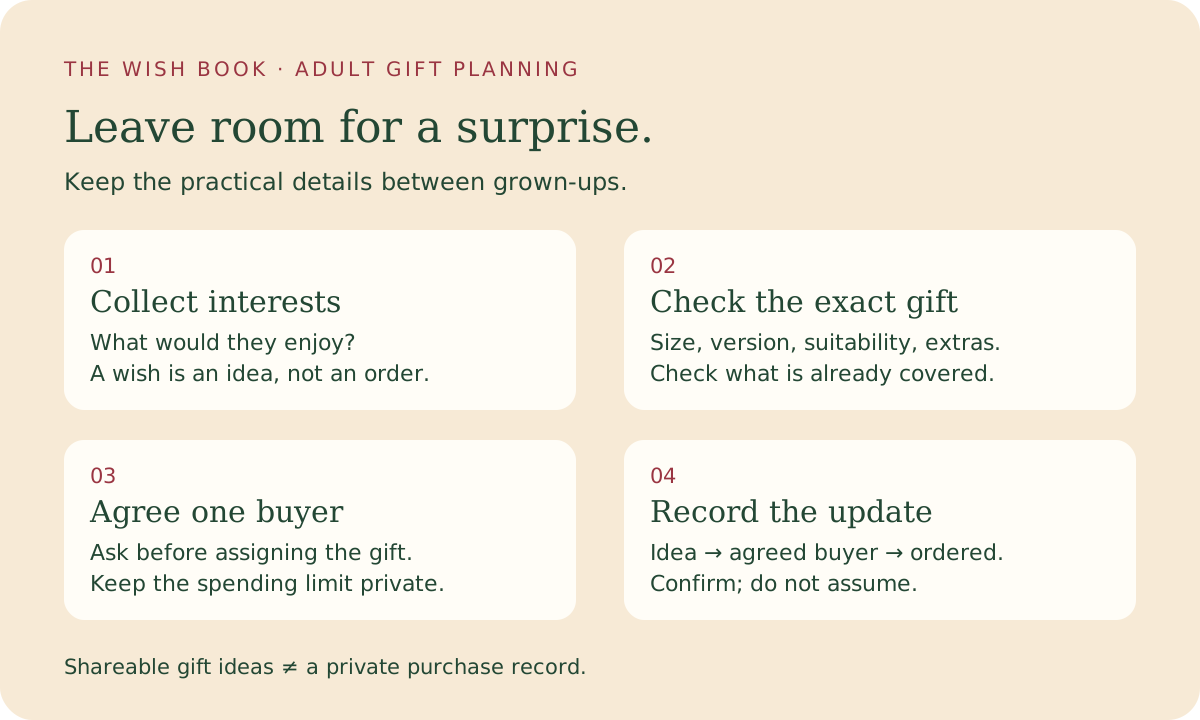
To avoid duplicate gifts, choose one adult coordinator, agree who is buying each exact item, and keep purchase updates in a private adult record. A shared wish list can collect ideas; it does not, by itself, tell you that someone has bought them. Leave grandparents room to choose a surprise within the interests and practical limits you have agreed.
Start with an interest, not a shopping assignment
Tell a short story about what the child enjoys now: drawing imaginary animals, building roads or asking for the same bedtime book. Then offer three directions: a small item, a larger option only if the grandparent asks, and time together. Do not assume anyone's budget or make the list feel like an order.
Try: “Drawing is a big thing at the moment. We already have a marker set, so a sketchbook or an afternoon drawing together could be lovely. Please keep it small; you can choose the surprise.” For larger gifts, agree storage, assembly and any required extras before anyone commits.
Copy this eight-field adult coordination worksheet
Keep one entry per exact gift in a private note or conversation that the responsible adults can access. These are planning fields for your own record, not a claim that the website stores all of them.
- Interest or idea: What would the recipient enjoy doing? Use a general description instead of a child's full name or personal details.
- Exact item: Record the size, edition, color or model if a mismatch would matter. An interest such as “art” is not an exact item.
- Suitability check: Note who will check the manufacturer's age guidance, warnings and required extras before purchase.
- Duplicate check: What is already owned, promised or being considered by another adult?
- Buyer and backup: Which adult has agreed to buy it? Who will check in if that person changes plans?
- Spending boundary: Record the agreed limit privately, including extras or delivery if relevant. “Ask first” is a valid answer.
- Current state and update time: Use “idea,” “agreed buyer,” “ordered,” “arrived” or “cancelled.” Record only what an adult has actually confirmed.
- Surprise and delivery boundary: Who should see the entry, who should not, and where will adults discuss delivery separately?
Before moving an item from “idea” to “agreed buyer,” the coordinator checks for overlap. Before moving it to “ordered,” the buyer confirms the exact item. If a gift is cancelled, tell the coordinator so the idea can become available again. A timestamp is a useful update marker, not proof of payment or delivery.
A worked example: two art gifts, one coordinator
This is a fictional planning example, not a purchase or a family using the service. The interest is drawing animals. The household already owns markers. One grandparent suggests another marker set; another suggests a sketchbook. The coordinator replies privately that markers are covered, then asks whether the first grandparent would prefer an afternoon drawing together.
The sketchbook entry now names one agreed buyer, records the size to check, and stays at “agreed buyer” until that person confirms an order. The drawing afternoon is a separate experience entry with a date window to agree. Neither entry needs a child's school, birth date, photograph or delivery address. The recipient can still be surprised by the wrapping, the chosen design and the time together.
If the sketchbook buyer changes their mind, the coordinator marks it cancelled and asks before assigning it to someone else. Do not tell the second adult to buy “just in case”; that recreates the duplicate you were trying to prevent.
Check what a shared list actually reveals
The Wish Book's shared-list page warns that anyone with the link can open and forward it. Treat that link as shareable, not confidential. The basic link carries the selected gift ideas; it is not a live private purchase ledger. A saved account list has a separate gift-claim path, but a claim is still not proof that a purchase was completed.
Before sending a real list, open a harmless sample selection in a second browser or ask an intended adult to check the view. Look for the selected items, any displayed reservation status and any information that would spoil a surprise. If you cannot verify what a particular link reveals, coordinate privately instead. Keep delivery details and buyer conversations out of the link.
Use the grown-up gift planner to collect ideas. Keep your worksheet separate unless you have checked that the relevant account feature does exactly what you need. The privacy page explains the site's handling of shared views, gift claims and optional email updates.
Keep suitability checks attached to the exact gift
The U.S. Consumer Product Safety Commission advises following age guidance and safety information on toy packaging and choosing toys that fit the child's interests and abilities. Check the exact item with its manufacturer or seller; a catalog category or this worksheet does not establish suitability. For secondhand products, the CPSC also advises checking for recalls before purchase.
A grandparent can still choose the item. The practical agreement is simply that one responsible adult verifies the details before it is bought. If the product changes, repeat the check rather than copying the old conclusion.
Make the next step small
Start with one gift in the free grown-up planner, then copy the eight fields above into your private adult record. For a time-together option, use the experience-gift planning guide to agree a date window, included costs and a fallback. Browse the Wishbook catalog for ideas without treating a wish as a buying commitment.
Adults who want more finds can choose the existing “Get on the list” signup shown beneath a shared list containing at least one item. Its separate consent checkbox is for emails from The Family Group Chat. Sharing a list does not subscribe anyone, and email signup is not required to use the planner. This guide does not offer a printed edition for purchase.
Source and review note
CPSC holiday gift safety guidance, checked October 19, 2026; no publication date is displayed on the page. The worksheet and fictional example are original editorial planning aids. First published October 14, 2026; substantially updated October 19 with the worksheet and sharing limitations.